

share on
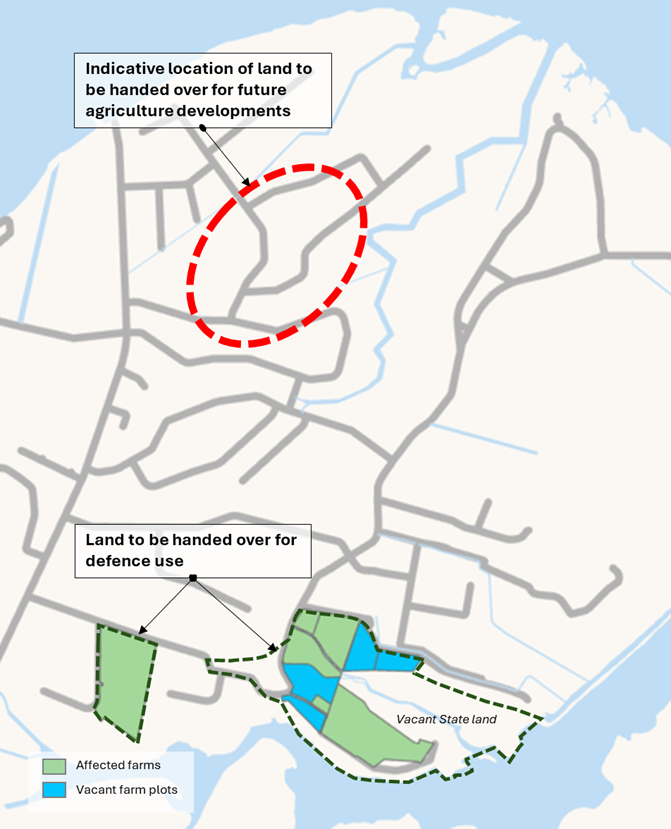
The move will see land in the north of Lim Chu Kang set aside for future agricultural developments, while southern plots will be repurposed for defence uses as Singapore reviews how to optimise its limited land resources.
The Singapore Government will be implementing land-use changes in Lim Chu Kang as part of ongoing efforts to optimise land use and meet evolving national needs.
In a joint press release, the Singapore Food Agency (SFA), Ministry of Defence (MINDEF), National Parks Board (NParks), and Singapore Land Authority (SLA) said the changes arise from ongoing land-use reviews.
Under the plans, land in the northern part of Lim Chu Kang that is currently designated for defence will be reallocated for future agricultural developments, while the southern part of Lim Chu Kang will be repurposed for defence uses.
According to Channel NewsAsia, the land-use changes will affect five farms in Lim Chu Kang:
- Seng Choon Farm,
- Bollywood Farms,
- Gan Aquarium,
- Gallop Kranji Farm Resort, and
- Malaysian Feedmills Farms
Why Singapore is reorganising land use in Lim Chu Kang
The agencies noted that as a small island nation with limited land, Singapore has to carefully plan how land is allocated across priorities such as housing, national defence, infrastructure, jobs, and food production. They added that strategic land-use changes are necessary to optimise scarce land resources and support the country’s continued growth and development.
According to the agencies, growing food locally continues to be an important pillar of the Singapore Food Story 2 strategy. This complements other efforts such as diversifying food imports, stockpiling, and strengthening global partnerships to improve overall food resilience.
The Government said the latest land-use changes will allow agencies to explore how the physical co-location of food and non-food farms in the northern part of Lim Chu Kang could support more efficient operations through shared facilities and integrated infrastructure planning. The agencies added that this could help improve logistics and lower production costs for farms operating in the area.
At the same time, the land consolidation is expected to create more contiguous plots that can better support defence uses in the southern part of Lim Chu Kang.
What the changes mean for affected farms
A total of five farm site lessees will be affected by the land-use changes, according to the agencies.
Two farm leases are set to expire in the mid-2030s, while the leases and tenancies of the remaining three farms will expire in December 2026 and March 2027. The agencies noted that the affected farms had already been informed since 2020 that no further lease renewals would be granted.
The Government said affected farms may continue operating on-site until the end of their existing tenures, after which the land will be returned for consolidation. It added that there will be no early termination of leases.
Farms that wish to continue operations may take part in the SFA’s annual Singapore Agri-space Sales (SAS) programme or apply for land tenders managed by the NParks.
The agencies added that they are continuing to engage and work closely with the affected farms to support a smooth transition and ensure continuity of local agricultural activities.
Lead image / Gallop Kranji Farm Resort
Photo in article / Singapore Land Authority
share on
Follow us on Telegram and on Instagram @humanresourcesonline for all the latest HR and manpower news from around the region!
Related topics
